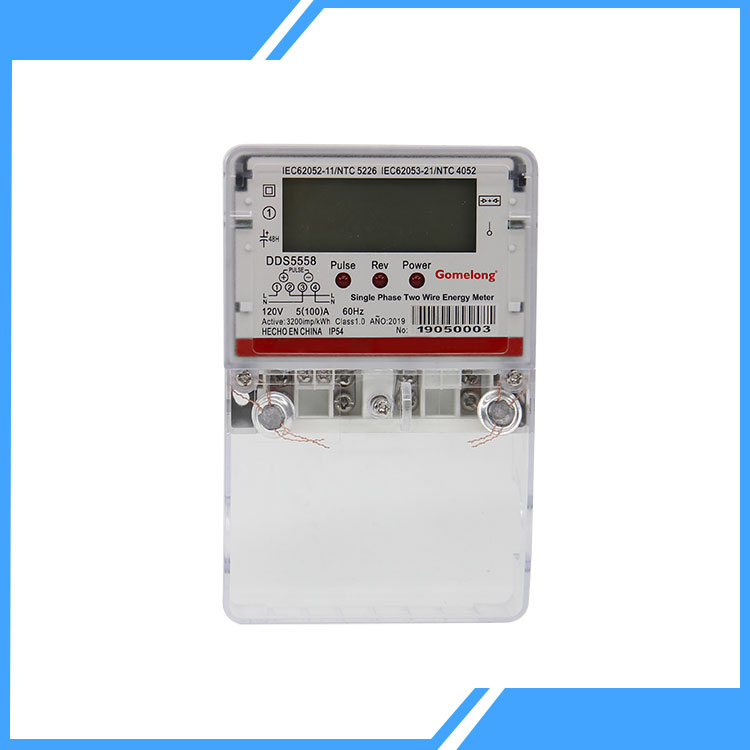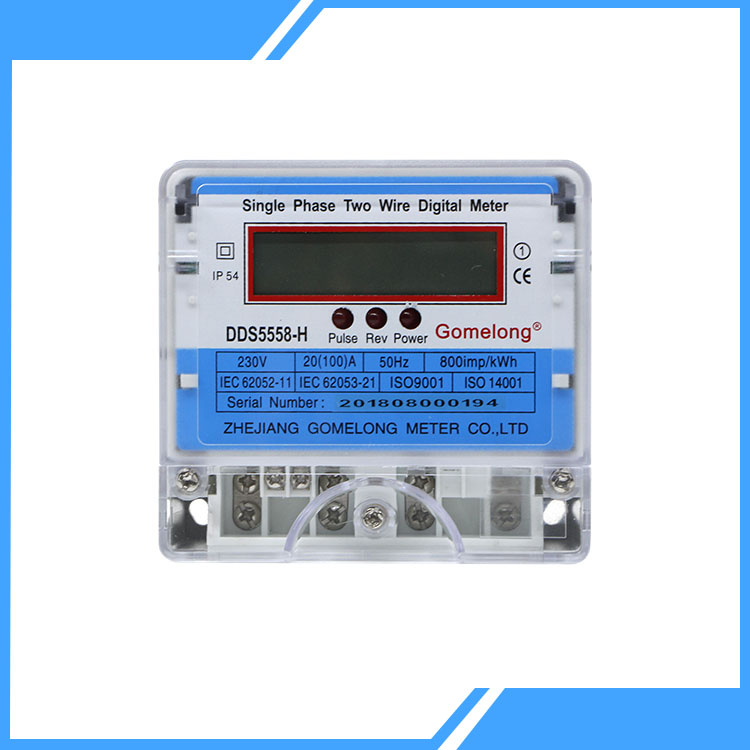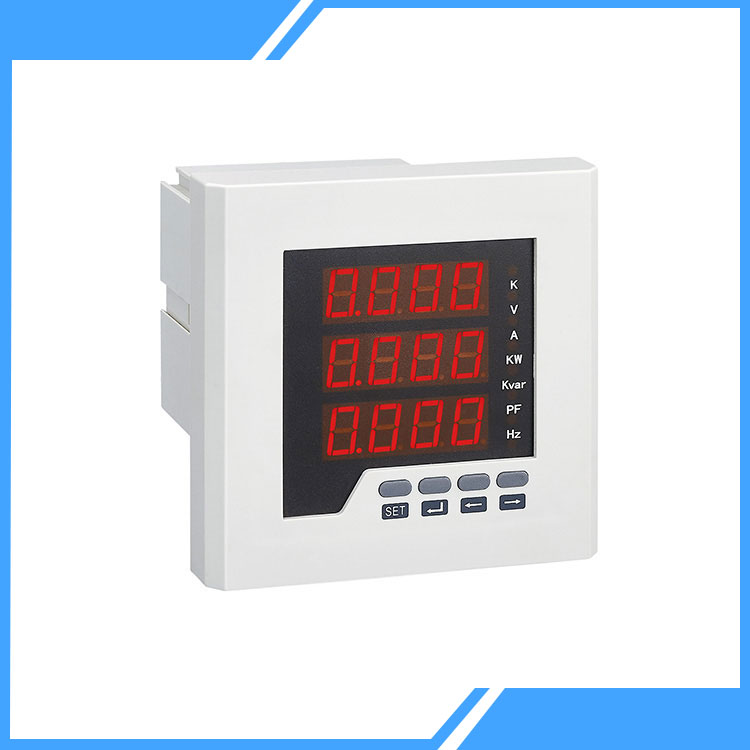
A Single Phase Kilowatt-hour Meter plays a critical role in accurately measuring electrical energy consumption in residential, commercial, and light industrial environments. With the rapid evolution of digital metering, smart grids, and energy-saving initiatives, selecting the right meter is no longer a simple task.
This in-depth guide explains how single phase kilowatt-hour meters work, key technical parameters, application scenarios, international standards, and how to choose the most suitable model for your power system. Whether you are an electrical engineer, project contractor, utility provider, or equipment importer, this article will help you make an informed decision.
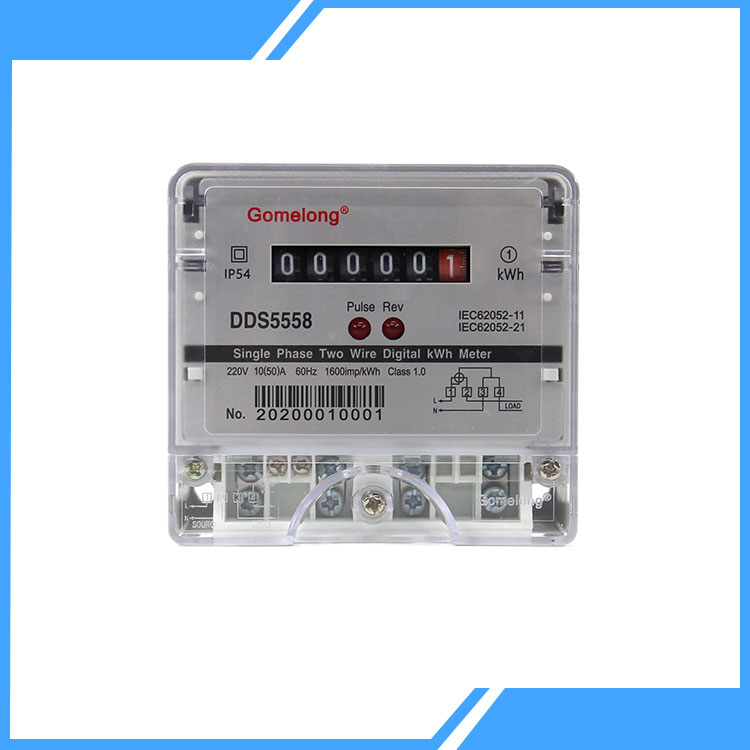
A Single Phase Kilowatt-hour Meter is an electrical measuring instrument designed to record the amount of electrical energy consumed by single phase loads over time. The measurement unit is kilowatt-hour (kWh), which represents one kilowatt of power used for one hour.
Single phase meters are commonly used in:
A single phase kilowatt-hour meter measures energy by monitoring both voltage and current flowing through a circuit. It calculates power consumption and integrates it over time to determine total energy usage.
Modern digital meters use electronic sensors and microprocessors, while traditional mechanical meters rely on electromagnetic induction.
When evaluating a single phase kilowatt-hour meter, understanding its technical specifications is essential.
| Parameter | Description |
|---|---|
| Rated Voltage | Commonly 220V or 230V for single phase systems |
| Rated Current | Typical values include 5(20)A, 10(40)A, 20(80)A |
| Accuracy Class | Class 1.0 or Class 2.0 according to IEC standards |
| Display Type | LCD or mechanical register |
| Communication | RS485, Modbus, or infrared (optional) |
Single phase kilowatt-hour meters are widely deployed across multiple industries:
Choosing the right meter requires careful evaluation of both technical and practical factors:
For professional-grade solutions, many buyers reference trusted manufacturers such as Gomelong single phase kilowatt-hour meters for stable performance and international certification.
Accuracy directly impacts billing fairness and energy analysis.
| Standard | Description |
|---|---|
| IEC 62053 | International standard for static energy meters |
| Class 1.0 | ±1% accuracy, commonly used for residential billing |
| Class 2.0 | ±2% accuracy, suitable for general monitoring |
Digital meters offer clear advantages over mechanical meters:
Proper installation ensures long-term reliability:
Gomelong is a professional energy meter manufacturer offering reliable single phase kilowatt-hour meters designed for global markets.
Most digital meters have a service life of 10–15 years under normal operating conditions.
Yes, many models support bi-directional energy measurement for solar applications.
Factory-calibrated meters generally do not require immediate recalibration.
They are ideal for light industrial and auxiliary loads, but heavy loads usually require three phase meters.
Selecting the right Single Phase Kilowatt-hour Meter is essential for accurate energy measurement, cost control, and system reliability. By understanding technical specifications, application needs, and compliance requirements, you can ensure long-term performance and efficiency.
If you are looking for high-quality, internationally certified single phase energy meters, Gomelong offers reliable solutions tailored to your project needs. Contact us today to learn more about our products and customized energy metering solutions.